Showing posts with label 2016 AtoZ. Show all posts

06 May 2016

Reflections on the April 2016 Blogging Challenge


The month of April takes a toll of sorts on bloggers due to the furious pace of posting, reading and commenting on blogs in the April AtoZ Blogging Challenge. This was my fourth attempt and I had planned the theme a while ago.. 

Of course this early planning did not really make my task easy but only lightened my work. You see, I had chosen to write about herbs. Herbs are things that we add to food right? So what is the issue? Well, instead of getting into the nitty-gritty, suffice to say that all spices are not herbs though some herbs can be spices... 

Confused? 
That's exactly what I did not want my readers to be. This meant I had to keep botanical terminology to the minimum yet try to keep my blog visitors interested. That was tough. Really tough. I do feel that fiction writers, food bloggers have it quite easy.. Talk about trees, plants, and people tend to be disinterested! 

Yet, I got lucky and I had few dedicated and interested visitors to my blog, who made it a point to comment. Thank you My Era, Seena, Kala, Dixita, Reema, Denise, Trisha for your unstinting support! (Before I forget, they have awesome posts for the challenge so make it a point to visit their blogs) 

My blog stats show many more visitors from around the globe and a huge Thank You to all of them as well! I do understand that its not always possible to comment - something that I have faced as well.. I tried to visit as many blogs as I could everyday, but I admit, I could have done much better. Commitments in the real world meant long periods away from the internet and I plan to catch up over the upcoming days.

Getting back to my series... I had to shortlist the herbs from my observations and go hunting for those I did not have. I am happy to report that except the alphabet Q and Y, I have collected all the images. While they are not of professional  quality, I was able to identify all the listed herbs - something that I am proud of. Identification was not always easy as many flowers were the size of a finger nail and a precise id was not always possible. If only plant could talk! Sigh... 

Of the 26 herbs (includes only the first herb mentioned in the post), 3 are Exotic and naturalised, 3 are Exotic and rest (20) are Native species. Besides the plant names, I managed to learn more botanical info about herbs, something that I intend to continue. 

I also came across some bloggers who wrote about plants which meant my theme was not an odd one out! 
Yay!!! 

In addition to web resources like Flowers of India, here are some of the books that  I referred to...

The AtoZ team had several posts with important tips and I found the one about creating signatures very useful! When on the PC, it was easy to comment on most blogs was easy except some that only permitted commenting via Google Plus- a platform that I do not use. However, commenting on some blogs (especially Word Press) was difficult when I was travelling as I had to use my phone for this purpose. 

A huge thanks to my family for their unquestioned support in ferrying me to strange places in search of herbs, patiently listening to botanical terms which may sound gibberish to them, sending me images and most importantly tech help! 

I leave you with some of the herbs that did not make the cut! 
Is it Alysicarpus sp or Indigofera sp?

Dipcadi
Urena lobata
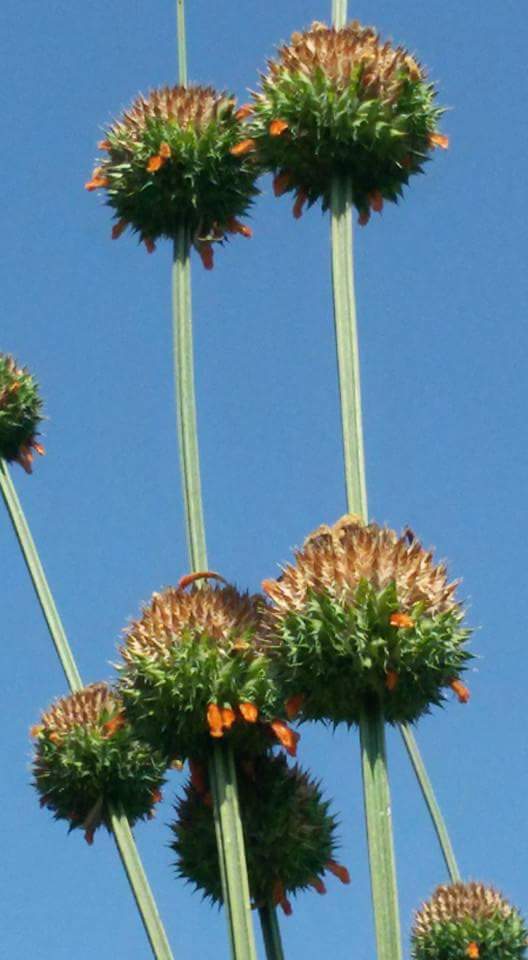
Seen on banks of the River Chushul in Ladakh. Possibly Cardus edelberghii 
I plan to post more regularly in the days to come, so do come over as often as you can. Better still, follow me on Twitter or follow the blog (check out the bar to the right of this post) to stay updated. 
Stay happy! Stay safe!
Happy blogging everyone!
:)

30 April 2016

Z is for Zingiber

Welcome! 
I am writing about herbs in the 2016 April AtoZ blogging challenge. Most of the herbs written in this series are those I have seen or used. Its been a roller coaster ride all through the month, reading some wonderful blogs, making new friends and ofcourse learning many new things. 

Hey this is not the reflections post, so I better get on with the topic of the day! The last letter, my final post for this year's challenge is Zingiber officinale of the Zingiberaceae family. We know it better as Adrak (in Hindi), Ginger, Ale (in marathi)! Is that a big Aha I hear!!!
:)

Truly, just recognising a particular plant gives a feeling of meeting a friend does it not? So if botanical names put you off, not to worry, go with the local names. The former have the advantage of being universally accepted so you can discuss the plant with anyone anywhere in the world being sure of what you refer to.

Getting back to Z. The edible part that is commonly used is the root. However its inflorescence is quite pretty as well but its quite rarely seen I am told. I have it planted in a pot but here are an image of ginger leaves from a friend. Mine is still an infant!!
Image courtesy Supriya Shelar
Ginger root
The root is used to flavour curries in Indian, Eastern and even Western cuisine. Adding crushed ginger to tea takes the beverage to a totally new level! Try it especially on a rainy day...Yet another winter specialty in Maharashtra is Ginger Squares also known as Alyachee wadi.. It is basically grated ginger cooked in sugar syrup and set into squares. It is a unique combination of hot and sweet. Via the 2016 April AtoZ I have discovered Ginger oil which seems to have immense medicinal effects.  

Getting back to the ginger blossoms, I have seen a variety called Champagne Ginger being used as part of flower decorations.
Champagne Ginger in a flower arrangement
 Here is an image of the blossoms of Torch Ginger. Isn't amazing?

Obviously there is more to ginger than meets the eye!

That's it from me! I hope you enjoyed this herbal journey as much I enjoyed putting it together. This is not the end of the road, as we will keep meeting in the blogsphere! 
Keep revisiting dear readers, I will be honoured. 

Thank you for your comments all through the month, they made were most encouraging.

Till we meet again, take care and happy blogging!
:)

29 April 2016

Y is for Youngia

Welcome! 
I am writing about herbs in the 2016 April AtoZ blogging challenge. Most of the herbs written in this series are those I have seen or used.  We are at the penultimate day of the challenge and surprisingly I had a big struggle for this post. The usual culprit alphabets like Q, U, Z did not present any trouble but unexpectedly Y did... No herb from my "collection'' fit the bill and I had to scour the world wide web for something suitable. 

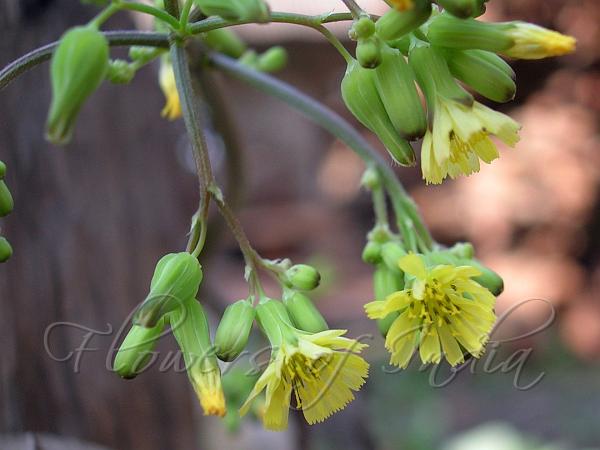
I got lucky and did not have to make do with some ''managed'' post. Without much ado, here is my Y herb.. Youngia japonica of the Asteraceae family. It is commonly called Oriental Hawkweed or Oriental False Hawksbeard. 


Image from Flowers of India 
As the name suggests, this herb is an invasive. The usual Google search threw up this interesting very well researched post by Green Deane and it's a must-visit site for those interested in botany. Apparently the plant has antiviral and anticancer properties! Amazing isn't it?

I have not managed to keep with with commenting on the many interesting blogs in the challenge though I did read many of them.. I'll try to comment as soon as I can sort out my commitments away from the world of the internet! 
How about you? Have you managed to keep with the posts? 
Happy commenting!
:)

28 April 2016

X is for Xanthium

Welcome! 
I am writing about herbs in the 2016 April AtoZ blogging challenge. Most of the herbs written in this series are those I have seen or used. Today's herb elicited happy childhood memories from my botany friends when I shared the images with them. Being brought up in the great city of Bombay (as it was then called) I was unfamiliar with this... Namely, kids often throw spiny fruit of this plant at people and watch it stick to their clothing. Obviously people in that age group find it funny!!
AtoZ blogging, pune,

So here we have it, X is for Xanthium strumarium which belongs to the Asteraceae family. Locally its called Shankeshwar or Ghagra in Marathi and another common name is Common Cocklebur. Naturally it was the bright shiny spiny fruit that caught my eye and some closer inspection of its leaves, stem and fruit helped identify the herb after I reached home. 


Ghagra is said to belong to Central America but it has now naturalised all around the world. The spiny fruit probably helps in seed dispersal by clinging on to animal fur. The herb has large lobed hairy leaves and the fruits are formed on the stem itself. The plant parts are said to have medicinal uses as well.

Have you any such childhood memories to share?

We are nearing the end of our blogging journey with another two days to go.
Hang in there friends!
:)

27 April 2016

W is for Withania

Welcome! 
I am writing about herbs in the 2016 April AtoZ blogging challenge. Most of the herbs written in this series are those I have seen or used. Today's herb is of immense medicinal importance in Ayurveda, so much so that India Posts has issued a stamp in its honour! 


Image courtesy Department of Posts 
W is for Withania somnifera commonly called Aswagandha or Winter Cherry. It belongs to the Solanaceae family (Brinjal or Egg Plant also belongs to this family). Unlike most herbs that I have described so far, this plant can grow up to six feet tall and has hairy plant parts. The fruits are striking with as they are covered with the papery calyx. It is said that the berries can be used in making cheese to substitute rennet. Here is an image of the plant with fruit that I have seen at the Udan Biodiversity Park but my friends have seen it growing wild around the city as well. 


Ashwagandha, AtoZ blogging, Withania

Here is a study about the medicinal effects of Ashwagandha. Worth reading this but at your leisure...
We are almost at the end of our journey and I am sure its been a wonderful month!
Take care folks!
:)

26 April 2016

V is for Vishnukranta

Welcome! 
I am writing about herbs in the 2016 April AtoZ blogging challenge. Most of the herbs written in this series are those I have seen or used. Today's herb is native to South America but is naturalised in many parts of the world, including India.

V is for Vishnukranta which is the local Marathi name for Evolvulus alsinoides belonging to the Convolvulaceae family. The herb is also called Dwarf Morning Glory. I have seen Vishnukranta growing on our tekdi (hills) and its blue flowers demand attention. I have found it to be prostrate and the branches spread out almost radially from a centre. The flowers, leaves and stem appear 'hairy'! Vishnukranta is said to have immense medicinal value as well.
Vishnukranta, Evolvulus alsinoides

Evolvulus alsinoides, Vishnukranta
I have yet another medicinal herb for you tomorrow, I am sure many of you would have heard of it.
Till then, happy blogging!
:)

25 April 2016

U is for Utricularia

Welcome! 
I am writing about herbs in the 2016 April AtoZ blogging challenge. Most of the herbs written in this series are those I have seen or used. We are into the final week of the challenge, and here we are refreshed after a holiday on Sunday. 

Flowers are always seem to convey beauty and innocence right? But I was quite surprised to find that some flowers are beautiful but the plant is not quite innocent, in fact they are just the opposite. Carnivorous to be precise!

We came across this pretty green and purple patch on a rocky plateau at Kaas and before I could go into raptures, our guide told us that the plant actually  has 'traps' that could catch and digest tiny insects... Sounds gory right, but then that is how Nature works and the Circle of Life is completed. In this case, insects are attracted both for pollination and food. Usually, the flowers are tasked with attracting pollinators and the traps to catch and digest insects are another found elsewhere on the plant.

Surely plants make their own food? Of course, but carnivorous plants often grow in habitats that are not rich in nutrients hence have to become.. well.. non-vegetarian!


AtoZ, blogging challenge, travel , herbs

So here we have it, U is for Utricularia which belongs to the Lentibulariaceae family. There are several species in this genus and many are endemic to the plateaus in the Western Ghats. Here is a close up, but dear reader, please forgive my amateur photography skills. These plants were barely 10"tall when I saw them.
The Burmann's Sundew (Drosera burmanii) is yet another stunning herb found at Kaas which is also carnivorous. 

Have you seen any carnivorous plants? Have you seen them in 'action'?
I have yet another interesting herb for you tomorrow.

Till then, Take Care!

23 April 2016

T is for Toothbrush Orchid

Welcome! 
I am writing about herbs in the 2016 April AtoZ blogging challenge. Most of the herbs written in this series are those I have seen or used. Today's herb has a strange common name and I have not really understood why it is so-called as it bears no resemblance to the real object.

My T herb is the Toothbrush Orchid which doesnt look like a toothbrush at all.. The only resemblance by a long long stretch is that the flowers are all borne on one side, just like toothbrush bristles. I first saw this at the Kaas plateau and recently saw it much closer to Pune, near the Varsagaon dam. Those plants were only about 6" tall, the creamy white flowers created a beautiful pattern on the grassy plateau. Young flowers are greenish white and change to yellow as they grow older.. 


It goes by the botanical name Habenaria heyneana and belongs to the Orchidaceae family. The Flowers of India website showed me 37 plants of the Habenaria genus- that's huge variety is it not?

Tomorrow is the fourth Sunday of April 2016 and then we enter the final stretch of our blogging challenge. Its been a wonderful journey so far, I am sure you agree. 
Have a great weekend folks!
:)

22 April 2016

S is for Spermacoce pusilla

Welcome! 
I am writing about herbs in the 2016 April AtoZ blogging challenge. Most of the herbs written in this series are those I have seen or used. Today I am writing about a herb that I have identified using the Flowers of Sahyadri app- I think the id is correct but am open to correction from any botany experts..

This tiny white inflorescence caught my eye as we waited for the coffee to boil on our make shift stove outside a sacred grove near Pune. The perfect blooms seemed to reiterate the survival spirit of every living being however small! 


This Spermacoce pusilla commonly called Tiny False Buttonweed or Tarkadal in Marathi of the Rubiaceae family. It has a quandragular stem with tiny prickles. S pusilla belongs to the Rubiaceae family (Coffee family) and is native to India.

Sopubia delphinifolia is yet another pretty herb that is seen on Pune tekdis. Sesamum orientale has pretty pink trumpet shaped flowers and I have seen it blooming in the monsoon. 
Sesamum orientale
Do come round tomorrow for yet another beautiful monsoon herb. 
Happy blogging!
:)

21 April 2016

R is for Rosemary

Welcome! 
I am writing about herbs in the 2016 April AtoZ blogging challenge. Most of the herbs written in this series are those I have seen or used. Today's herb is used widely in India and overseas mainly to flavour food. 

Any guesses?  That's right, it is Rosemary. The botanical name is Rosmarinus officinalis and belongs to the Laminaceae family. It is generally errect with needle like aromatic leaves. I was a late user of this particular herb and am a big fan now. So much that I am trying to grow it at home. It seems to be happy here but has not flowered yet. Hence I am reluctant to use its still young stems and prefer to source my rosemary from the super market!  
Rosemary twigs ready for cooking

Tiny Rosemary shoots in my kitchen garden

As you can see from my bio, I am a reluctant cook, yet here is an absolutely divine dish that you can make using rosemary. Do not count calories because as someone said, whatever tastes good would be calorie rich too...

Do follow this link for the detailed recipie of Baked Potato and Rosemary Gratin, but here is what it looks like:


I am sure there will be no leftovers! 
Enjoy!

20 April 2016

Q is for Quick Weed

Welcome!
I am writing about herbs in the 2016 April AtoZ blogging challenge. Do catch up with the herbs so far, you may find some thing interesting, someone familiar. 

As expected Q was the biggest challenge but I finally I did find one herb that fit the bill... My herb for the day is Quick Weed or Galinsoga parviflora that belongs to the Asteraceae family. Its an annual herb which is native to India, specifically the North East states. It also goes by the common names of Gallant Soldier and Potato weed. The botanical synonym is Tridax parviflora and one of its close 'cousins' Tridax procumbens grows profusely in my part of the world. At first glance the two plants have similar flowers and I have taken the liberty of posting a Tridax procumbens flower so you get an idea of what Quick Weed looks like.


That's it for Q. I have something really interesting in store tomorrow for R. 
Till then take care!
:)

19 April 2016

P is for Pinda

Welcome! 
I am writing about herbs in the 2016 April AtoZ blogging challenge. Most of the herbs written in this series are those I have seen or used. The first time I saw today's herb was in a lecture of our Field Botany class. The white blossoms reminded me of carrot flowers.

Pinda concanensis has delicate white blossoms and the herb usually grows on the cliff edges in the Western Ghats. My first encounter with the Pinda was at Kaas and more recently at Raireshwar Plateau. Pinda and many other herbs grow only in their specific habitats and one has to make the journey to those parts to see the plants up close. And the journey is totally worth it! Its easy to identify the endemic herbs of the Western Ghats once they are in bloom. 
endemic herbs, Travel, herbs, AtoZ
Pinda belongs to the Apiaceae family, same as carrots- which explains my initial recall of the plant. 

Which of the herbs showcased till now have you seen or used? 
Do let us know.
There are more lovely herbs on the rest of the journey till the alphabet Z.
Do visit again.
Till then, take care!
:)

18 April 2016

O is for Ocimum

Welcome! 
I am writing about herbs in the 2016 April AtoZ blogging challenge. Most of the herbs written in this series are those I have seen or used. Today's herb is used widely in India both for medicinal and religious reasons.

Beautiful flowers of Tulsi Photo courtesy @puneribaker
AtoZ, blogathon, tulsi
Photo courtesy @puneribaker
holy plants, offerings, AtoZ blogging challenge
Photo courtesy @puneribaker
That's right, I am talking about the Holy Tulsi or Ocimum sanctum of the Laminaceae family. Many households have a Tulsi growing in their homes, in the balcony or terrace or garden. The plant has a long list of medicinal benefits. The Tulsi leaf is offered during pooja and is said to be the favourite of Lord Vishnu. However the Tulsi is offered to Lord Ganesha only during the Ganeshutsav period and not on other days of the year.
Tulsi (Ocimum sanctum) plant
The herb is native to India and has almost round leaves with a toothed margin. The entire plant is tomentose and fragrant. Leaf colour may vary from shades of green to reddish purple. The delicate flowers bear tiny seeds which are widely used as well. 

We are at almost half way through the challenge. How has it been so far for you? 

Good luck for the rest of the blogathon!
:) 

16 April 2016

N is for Nisurdi

Welcome! 
I am writing about herbs in the 2016 April AtoZ blogging challenge. Most of the herbs written in this series are those I have seen or used. Today's herb is one that I have seen in the Western Ghats. 

My herb for the letter N is locally called Nisurdi or Common Hill Borage and its botanical name is Adelocaryum coelestinum of the Boranginaceae family. There are frequent stops when trekking up a hill on a hot day when the monsoon is playing truant. the sight of a colourful carpet is soothing indeed. The heart shaped leaves of the Nisurdi caught my eyes before I spotted the flowers. The errect herb had large leaves at its base and its petiole was surprisingly red. The flowers were light blue or white and have a blue centre. 


AtoZ herbs, travel, trekking ,western ghats
Red petiole and heart shaped leaves
western ghats, endemic herbs.
Adelocaryum coelestinum
This pretty species has two of its 'cousins' that also grow in this area and are endemic to this region. They are Adelocaryum lambertianum and Paracarypopsis malabarica. The famous Forget Me Not flower (Myosotis alpestris) belongs to the Boranginaceae family too.

Kaas Plateau of Flowers- a book by Sandeep Shrotri is good resource for those planning a visit to see monsoon blossoming there. 

Another much deserved Sunday holiday is up next for the AtoZ blog challenge takers. I hope to catch up with some more wonderful blogs out there. 

Have a wonderful Sunday folks!
:)

15 April 2016

M is for Mimosa

Welcome! 
I am writing about herbs in the 2016 April AtoZ blogging challenge. Most of the herbs written in this series are those I have seen or used. Today's herb is one that I had studied many moons ago in school and I am sure most of you would have heard about it or seen it. 

M is for Mimosa pudica most commonly called Touch Me Not belonging to the Mimosaceae family. The plant probably owes its common name and fame to the property of its leaves closing up and drooping when touched. Mimosa has very pretty ball shaped pink flowers. Identifiying this herb is easy, just touch it and you would know! Touch Me Not is called Chui-Mui or Lajwanti and grows extensively in the tropical regions.


AtoZ Herbs, Mimosa, touch me not

Another lovely 'M' herb is Murdannia which grows in the grasslands of the Western Ghats.
Thanks for visiting and have a great day!
:)

14 April 2016

L is for Lepidagathis cristata

Welcome! 
I am writing about herbs in the 2016 April AtoZ blogging challenge. Most of the herbs written in this series are those I have seen or used. Today's herb is another discovery on my morning walk... 

I had spotted a curious spongy looking semicircular growth on the hill which occasionally had leaves around it. It was not clear if the leaves grew out of this central white structure or were from some other plant. I referred to a group of plant lovers who identified it as Lepidagathis cristata of the Acanthaceae family. This plant is native to India and goes by the common name of Crested Lepidagathis or Bhu Terada in Marathi. It is said to have medicinal value as well.

The flowers are stalkless and arise from the centre dome

Branches arise from the central dome like structure
Another interesting herb also from our neighbourhood hills is most likely the Lavandula bipinnata of the Laminaceae family. Here it is:

I hope you are enjoying this blogging challenge as much as I am. 
Bye for now and Take Care!
:)

13 April 2016

K is for Kaempferia rotunda

Welcome! 
I am writing about herbs in the 2016 April AtoZ blogging challenge. Most of the herbs written in this series are those I have seen or used. I have seen this K herb only once as part of a botanical study tour. I am told the flowers are just as stunning in the wild too.

My K herb is Kaempferia rotunda also known as Bhui Chafa in Marathi or Indian Crocus. The blossoms emerge from the ground before the leaves appear which may explain its local name. Its bulbs remain dormant throughout winter and flowers arise one or two at a time, lasting only for a couple of days. If you are amazed with the flowers, then hold on, because its leaves are said to be stunning. The leaf front is green with silvery marks and is purple on the back. Kaempferia rotunda belongs to the Zingiberaceae family and is a native. As I was on a botanical study tour, identification was not an issue! 

;-)


Indian crocus, Bhui champa, peacock ginger

This is one herb I will be looking out for, and I am sure you will too.
Happy herb spotting!
:)

12 April 2016

J is for Justicia adhatoda

Welcome! 
I am writing about herbs in the 2016 April AtoZ blogging challenge. Most of the herbs written in this series are those I have seen or used. My herb for the alphabet J is said to be an excellent remedy for cough and asthama. Having said that, I have not myself used this as a medicine.

Some of you may have guessed, J is for Justicia adhatoda which is commonly called Adulsa and it  belongs to the Acanthaceae family. Its flowers are white and resemble the open mouth of a lion! Well, that may sound like an exaggeration but its the closest I can get to  describe flower shape in general terms. The petals have pink lines on them which are said to be pathways to guide insects into the flower - this helps in pollination. All plants have their own special mechanisms to attract their respective pollinators. The leaves are lanceolate, opposite and slightly hairy. While the plant is of huge medicinal importance to humans, it is said that goats and other herbivores do not like this foliage as food... The herb grows to be fairly tall and is a native species. 

Here are some of my amateur images...


Image Source Wikipedia (By ShineB - Own work, CC BY-SA 3.0)

That's it for today.
Happy blogging and take care!
:)

PS: Some authorities have classified Adulsa as a herb and some has a shrub. My blog has benefitted from these differences!

11 April 2016

I is for Iris lactea

Welcome! 
I am writing about herbs in the 2016 April AtoZ blogging challenge. Most of the herbs written in this series are those I have seen or used. Most of them are not very tall either, and flowers are often only the size of a finger nail or smaller. For today's, post I have two herbs one from the northern most part of India and one from the Western Ghats. 

I have chosen the Milky Iris or Iris lactea as my first I herb. It has very pretty white and purple blossoms and commonly grows in the Ladakh and Kashmir in India. The local name is Temamentok and it is a Native. The flower reminded me of the Iris and we were lucky to spot the blooms in the month of May. Hence identifying the plant was comparatively easy as I searched among 'Iris' on the Flowers of India website. Milky Iris belongs to the Iridaceae family 


Himalayan flowers, Ladakh, Iris lacteata

Yet another beautiful I herb is Impatiens dalzellii all called Dalzell's Yellow Balsam. Again a native plant that is endemic to the Western Ghats. Its lance shaped leaves are striking as they have spines in between the teeth of the margin. It belongs to the Balsaminaceae family.


herb, AtoZ, Impatiens dalzellii, Kaas

I am sure you would have loved these blossoms. 
Which plants have you noticed in your travels?
Do tell us!
:)

09 April 2016

H is for Hygrophila schuli

Welcome! 
I am writing about herbs in the 2016 April AtoZ blogging challenge. Most of the herbs written in this series are those I have seen or used. Many are not very tall either, and flowers are often only the size of a finger nail or smaller. I thought identifying them was the difficult part but I was wrong. Choosing which herb to write about has been more difficult!! 

Without much ado, let me introduce you to my H herb... It is Hygrophila schulli also called Talim Khana in Marathi and Kokilaksha in Sanskrit. I spotted this armed (meaning a plant with thorns) herb due to its striking purple flowers in an otherwise almost bare patch of land near Satara. These blossoms were in tough competition with the ancient temple close by and which was the basic purpose of our visit there!

There were a few specimens growing near a small pond and all had long yellow axiallary spines.  the entire plant was hairy as were its leaves. The flowers had bracts and bracteoles which is seen in the Acanthaceae family. The purple corolla was bi-labiate meaning two petals on top and three below. Identification was using the FOS app by Shrikant Ingalhalikar.


AtoZ blogging, Hygrophila schuli, herbs
Notice the corolla

Yellow spines
Some texts have classified Hygrophila schuli a subshrub so here is another H herb seen in during our morning walks, namely the Hyptis suaveolens of the Laminaceae familyThe most striking feature of this herb is its quadrangular stem and highly fragrant leaves!

Have these posts inspired you to look more closely at the tiny flowers growing around you?
I am sure are many beautiful blossoms just waiting for you..
Enjoy!